
👋 Happy Holidays!
The Maasai community of Kenya and Tanzania greet each another by asking, “And how are the children?” It’s a reminder that the well-being of children reflects the well-being of the whole community — and that every decision we make should be measured by its impact on the youngest among us.
That question is at the core of the Burke Foundation’s work: How are New Jersey’s children? And what more can we do for them to be healthy, supported, and able to thrive? Families want the very best for their children, yet too often face financial strain and systemic barriers that limit the availability of care and resources they deserve. Burke’s mission is to help bring down those barriers and improve conditions that enable families to live healthy, joyful, hopeful lives.
Each year, the December issue of Starting Early celebrates the Burke Foundation Community Champions — leaders whose work answers the question “How are the children?” with action, innovation, and deep commitment to families.
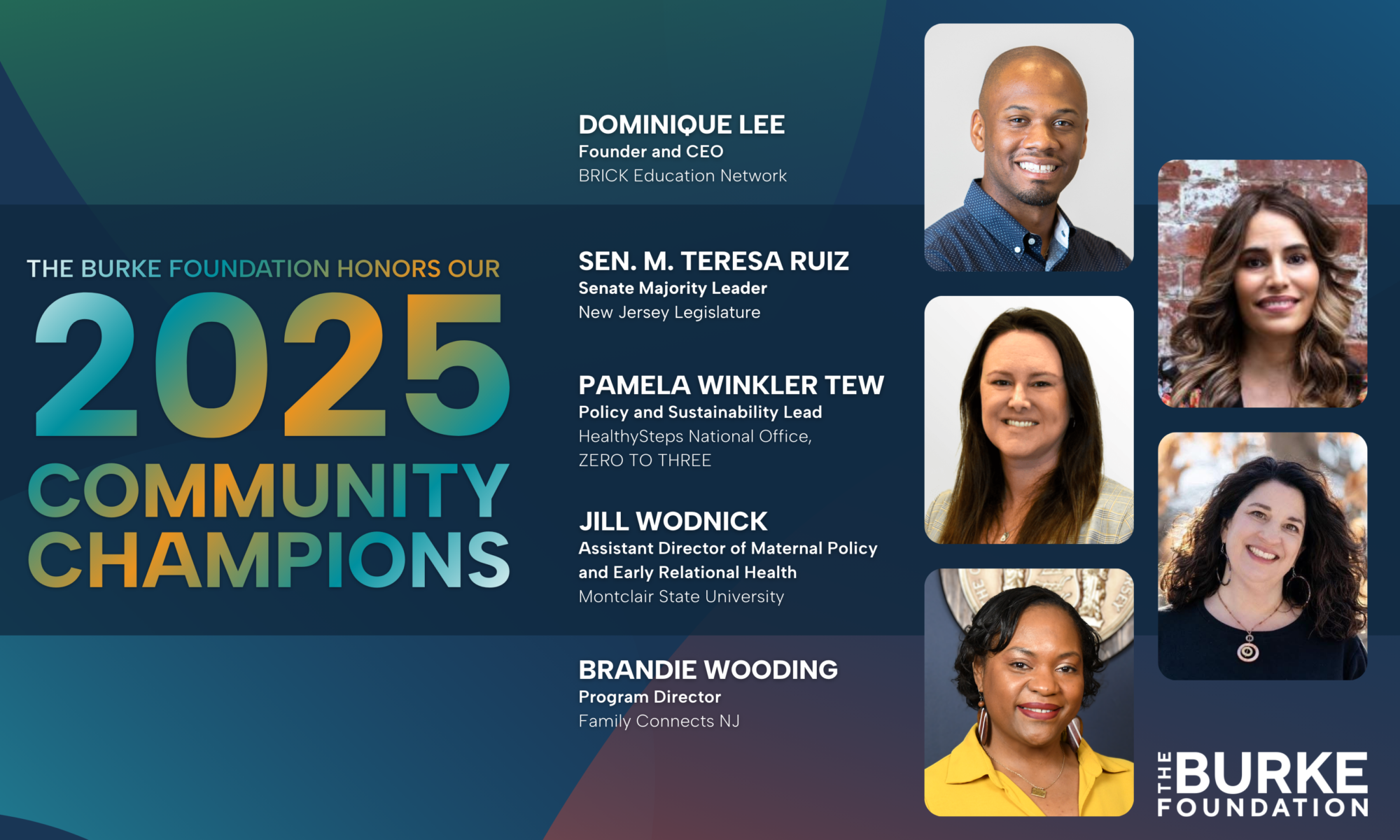
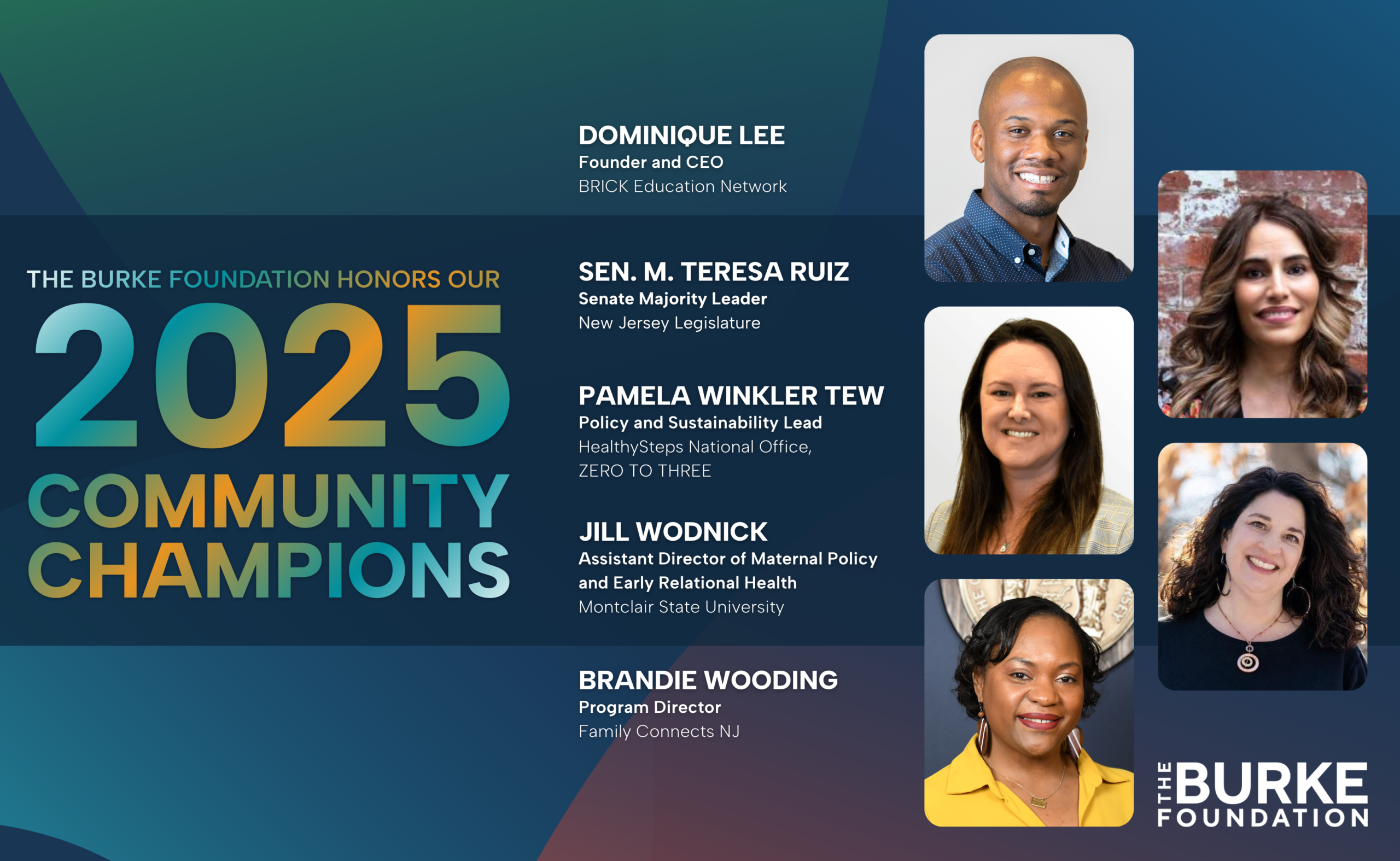
Burke Champions reimagine ways to replace outmoded systems, expand access, and help families navigate the challenges of birth and early childhood with confidence and dignity. We proudly introduce the 2025 Burke Foundation Community Champions:
⭐ Dominique Lee, founder and CEO, BRICK Education Network
⭐ M. Teresa Ruiz, New Jersey State Senate Majority Leader
⭐ Pamela Winkler Tew, policy and sustainability lead, HealthySteps National Office, ZERO TO THREE
⭐ Jill Wodnick, assistant director of maternal policy and early relational health, Montclair State University
⭐ Brandie Wooding, program director, Family Connects NJ
Each of these leaders understands the difficulties too many families must endure: financial pressure, health concerns, unresponsive systems. Each works to create pathways that strengthen children’s health and well-being from the earliest years. Their efforts uplift families, motivate communities, and build a better future for New Jersey. They join 14 previous Burke Champions chosen since 2022.
Read more about our 2025 Community Champions below and explore their Q&As to see why their leadership inspires us.
Atiya Weiss
Executive Director, the Burke Foundation
1. Advancing opportunity through community partnership
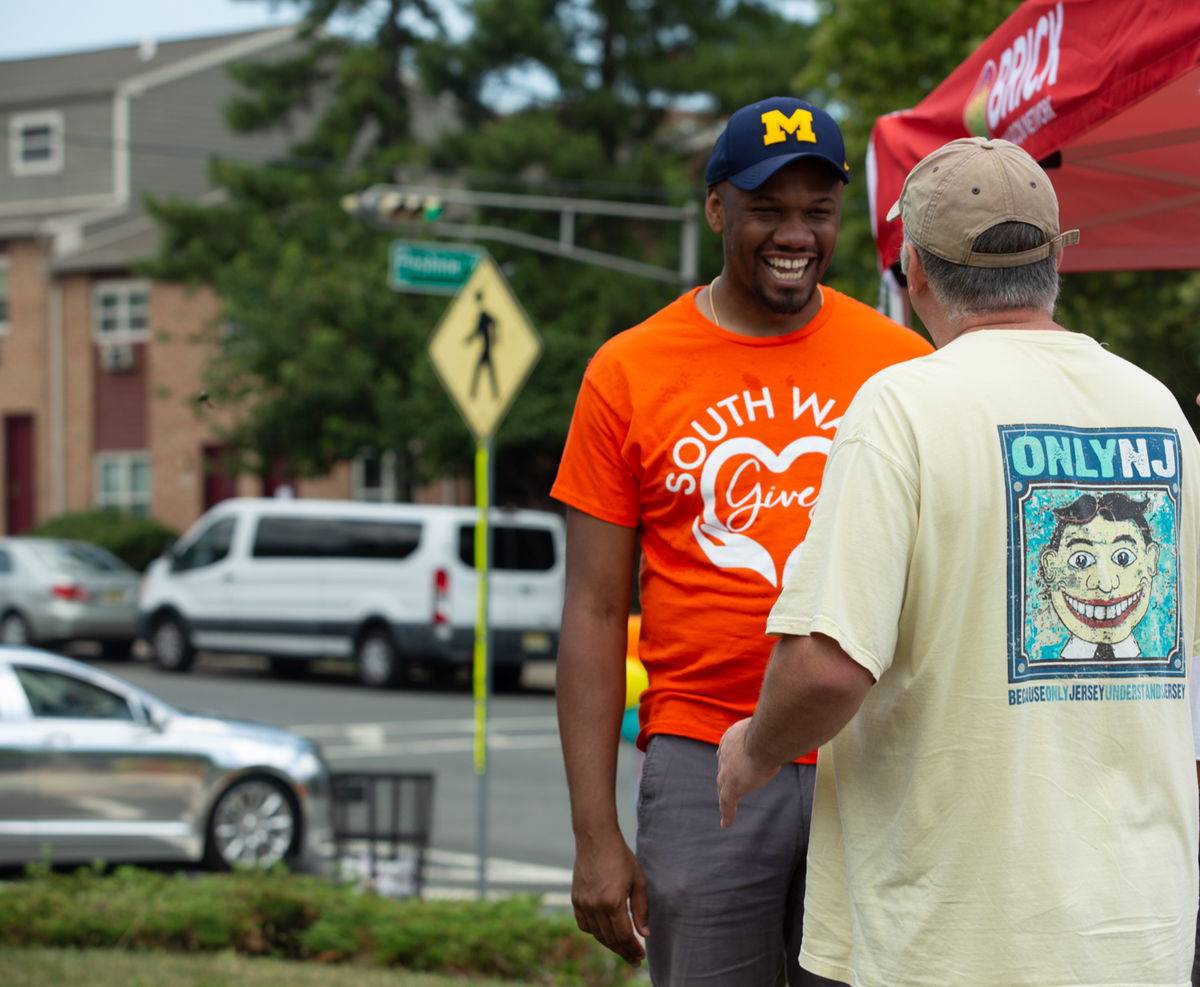
Dominique D. Lee, founder & CEO, BRICK Education Network
Dominique Lee leads a transformational effort to promote opportunity for children and families in Newark’s South Ward. Grounded in the belief that education is the gateway to opportunity, he’s committed to addressing generations-long inequities that deny too many Black and brown children the chance to thrive. Through BRICK and the South Ward Promise Neighborhood, Dominique’s cradle-to-career approach weaves together quality schools, maternal and child health supports, stable housing, and meaningful pathways to economic prosperity — all designed in partnership with the community.
Under Dominique’s leadership, BRICK has earned national recognition for its holistic, place-based approach. He’s a Pahara Aspen NextGen Fellow and former Teach For America Corps member — an experience that ignited his commitment to public education and social change.
Dominique is proud to see the long arc of this work take shape. Students who entered BRICK schools more than a decade ago are graduating from college and stepping into meaningful careers. Mothers in the South Ward are becoming community-based doulas, increasing their household income and supporting healthier births. Adults who never completed college are earning degrees through the Gateway U hybrid higher education initiative.
Partnership is central to BRICK’s approach, he says, and requires shared intentions, shared values, and shared accountability — along with the courage to learn together when data shows more work is needed.
“What gives me hope — and what keeps me waking up every morning to do this work — is the determination I see from our families,” Dominique says. “The work ahead is continuing to remove the barriers that stand between families and the dreams they’ve set for themselves.”
2. Making early childhood a public priority
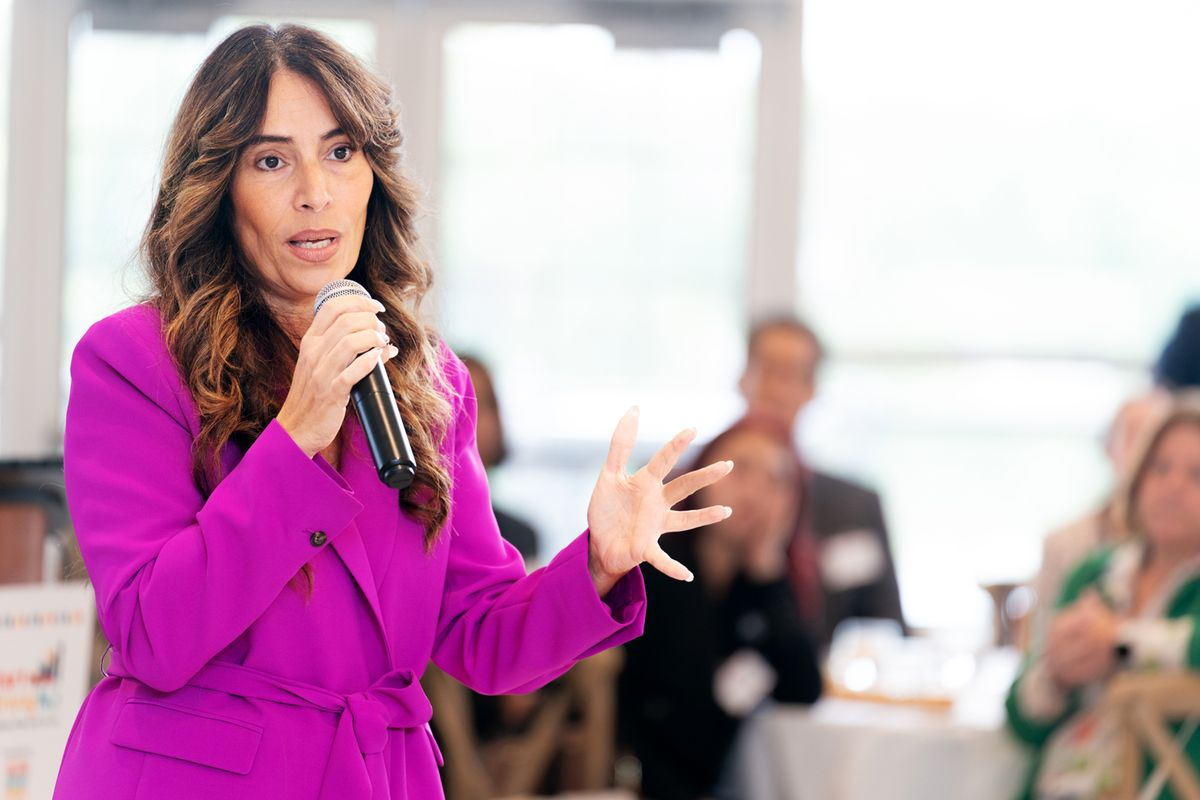
Sen. M. Teresa Ruiz, New Jersey State Senate Majority Leader
State Senate Majority Leader M. Teresa Ruiz has spent nearly two decades shaping New Jersey’s policy landscape to better serve children, families, and communities. Elected to her first Senate term in 2007, she is one of the Legislature’s most influential leaders — particularly on issues that affect families during the earliest and most formative years of life.
A driving force behind New Jersey’s progress toward universal preschool, Senator Ruiz champions public investment to expand access to high-quality early learning, strengthen the child care workforce, and help families find affordable, reliable care close to home. Her leadership reflects a clear understanding that early childhood education is foundational infrastructure — essential not only to children’s development, but to family stability, workforce participation, and New Jersey’s long-term economic health.
Beyond early learning. Senator Ruiz advances a broad agenda focused on maternal and child well-being, educational opportunity, and family economic security, grounded in the belief that supporting parents holistically strengthens communities. One of the accomplishments of which she is most proud — the Universal Newborn Home Visitation Program — was inspired by her experience receiving in-home lactation support after the birth of her daughter. Today, the initiative helps New Jersey families get critical support in the first days after bringing a newborn home, regardless of parents’ income or insurance status.
In recent years, Senator Ruiz has played a central role in efforts to strengthen New Jersey’s early childhood ecosystem, including proposals to better coordinate services across agencies, stabilize child care funding, and expand infant and toddler care. Her work has a consistent throughline: listening to families’ diverse experiences and responding with policies that meet them where they are — recognizing that effective solutions can’t be one-size-fits-all, and that collaboration helps expand access to child care that supports strong beginnings and a stronger New Jersey.
“When parents can return to work, our economy grows,” Senator Ruiz says. “When children are supported early, they can thrive for a lifetime.”
3. Making pediatric care work better for families
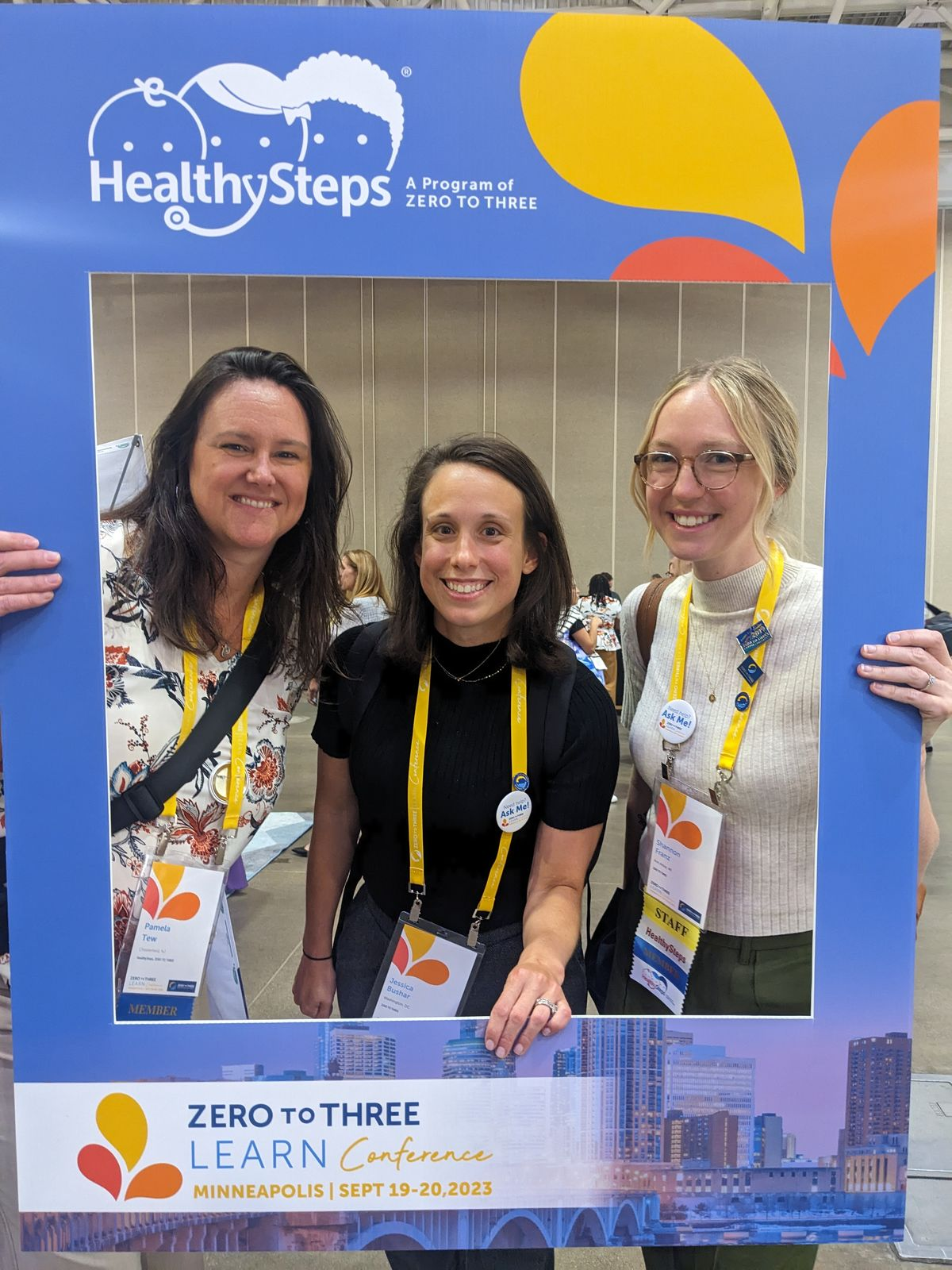
Pamela Winkler Tew, New Jersey policy and sustainability lead, HealthySteps National Office, ZERO TO THREE
Pamela Winkler Tew‘s work is pivotal in determining how pediatric primary care supports families during the most formative years of a child’s life. A licensed social worker, she works with health systems, state agencies, and community partners to scale the innovative HealthySteps early childhood development initiative, strengthen financing pathways, and make sure the model is built to last.
Pam joined ZERO TO THREE in 2020, just as the first 3 HealthySteps sites were created in New Jersey. Since then, she’s helped drive expansion across the state. Her career has focused on strengthening child-serving systems, spanning child welfare and Medicaid alignment, community-based advocacy, and support for families facing complex challenges.
Pam brings to her work an abiding understanding of what families — and pediatric care teams — need to facilitate young children’s development. The essence of HealthySteps is simple but powerful: placing an early childhood development and behavioral health expert inside the pediatric office to support families — and the pediatric team — during the foundational first 3 years of children’s lives. Pam’s work focuses on the HealthySteps approach’s effectiveness and financial sustainability, so more families across New Jersey can benefit.
NJ FamilyCare, the state’s Medicaid program, recently added an additional payment to practices that use HealthySteps, promoting long-term sustainability for families who rely on pediatric visits as their most consistent point of early-childhood support.
“That was the culmination of advocacy work I’ve been able to lead here in New Jersey, which lifted up the voices of families and providers who had seen the difference of HealthySteps,” Pam says. “Given what’s happening at the federal level with Medicaid — and the potential for losing ground in terms of child and family health — it means a lot that this reimbursement pathway will remain available to support services for families.”
4. Centering dignity and connection in maternity care
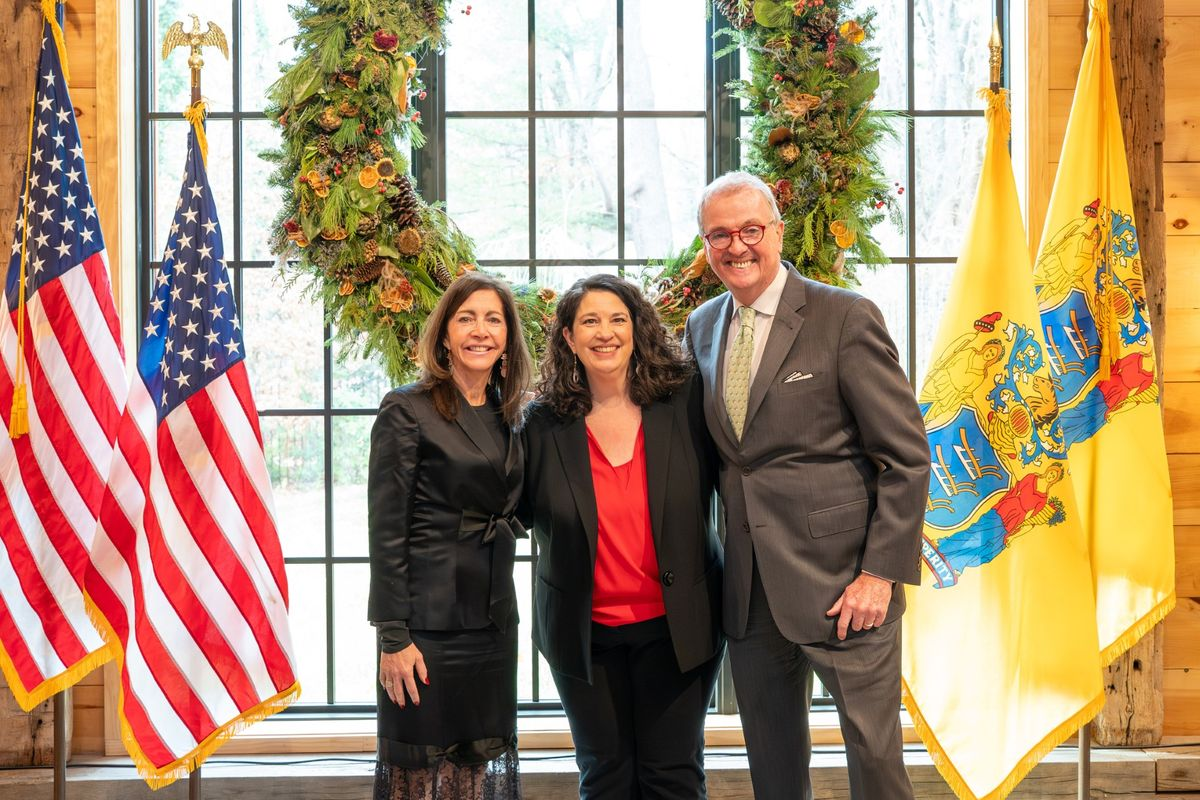
Jill Wodnick, assistant director of Maternal Policy and Early Relational Health, Montclair State University
In her third decade working at the intersection of birth equity, early relational health, and public policy, Jill Wodnick helps build New Jersey’s and the nation’s understanding of respectful, community-centered maternity care. A certified Lamaze childbirth educator, longtime doula, and nationally recognized maternal health advocate, Jill blends clinical knowledge, system-level expertise, and deep relational insight in her work.
At Montclair State, Jill’s focus includes Medicaid benefit design for doula care, strengthening the midwifery model of care, and expanding access to birth centers.
Her career spans community education, curriculum development, perinatal mental health, federal and state advocacy, and technical assistance for community-based organizations. She was an expert doula for Pregnancy Magazine and PBS, coordinated community doula programs, and provided leadership across New Jersey’s maternal health landscape.
Reflecting her profound belief in the dignity of birth, Jill champions childbirth education as a powerful way to equip families with knowledge, strengthen early relational health, and support safer, more respectful experiences. She’s passionate about the need to better support families during the “fourth trimester,” elevate community voices, and create policies that reflect the biological, emotional, and cultural realities of birth.
“When someone sings to their baby or responds to their baby’s cues, they’re participating in a profound biological process,” Jill says. “Pregnancy and early parenting are filled with opportunities to move from disconnection to connection, and policies and systems can either support or undermine that potential.”
5. Connecting families to care from Day 1
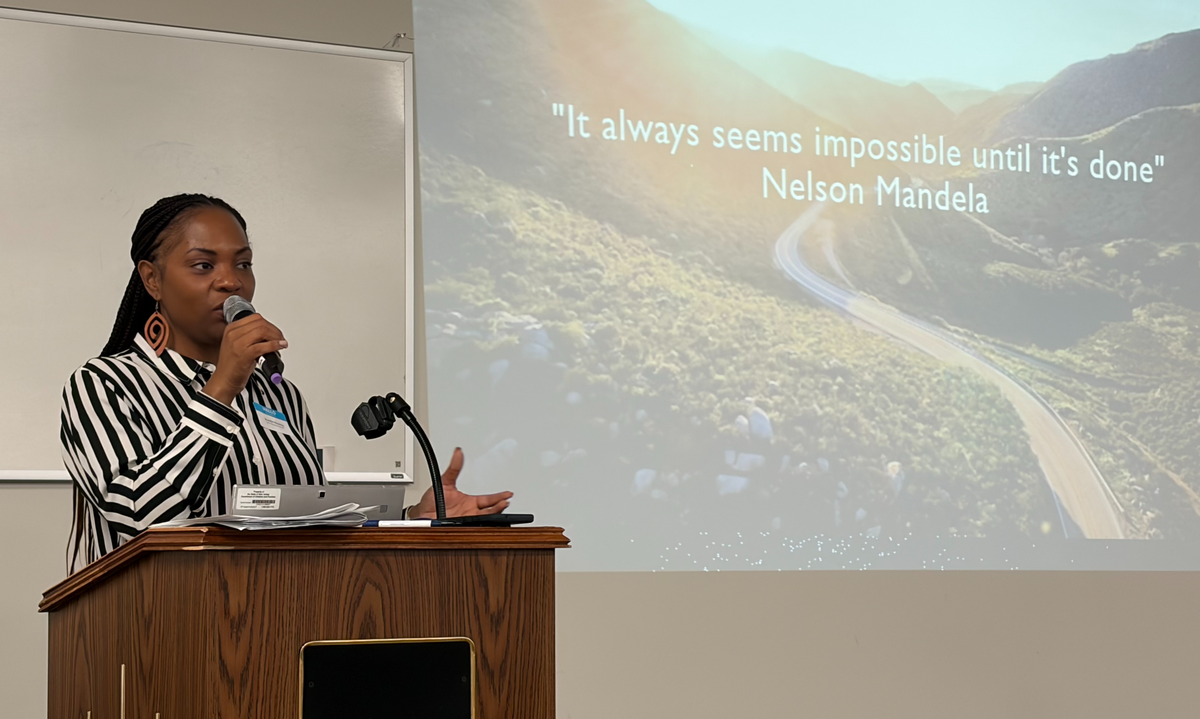
Brandie Wooding, program director, Family Connects NJ
At the state’s new universal postpartum home-visitation initiative, Brandie Wooding is in the forefront of New Jersey’s support for families in the earliest days after birth. A nurse with 20 years’ experience in clinical care, academia, and public health, Brandie leads implementation of a groundbreaking model for making sure every family has access to a nurse home visit, no matter their background or circumstances.
Family Connects NJ offers a visit from a trusted nurse who meets families where they are, screens for postpartum health and social needs, and connects them with community-based supports that promote safety, stability, and well-being.
Before assuming this role, Brandie co-led the state’s first Maternal Health Task Force — now the New Jersey Maternal Care Quality Collaborative. Her leadership helped anchor maternal and infant health as a statewide priority.
Brandie is proudest of the people and the partnerships behind this work: the growing network of nurses, program support specialists, local medical directors, and community alignment specialist staff who bring Family Connects NJ to life. In just a few years, the program has expanded from reaching a few hundred families to approaching its 8,000th visit.
“It promotes trust and collaboration when people see that their feedback leads to real change,” Brandie says. “I can say, ‘Remember when you suggested this? I was able to put it into motion.’ You don’t do this work alone or in a silo. We all have different strengths and backgrounds, and that makes partnerships stronger.”