
1 big thing: Reading with baby builds emotional connections and resilience
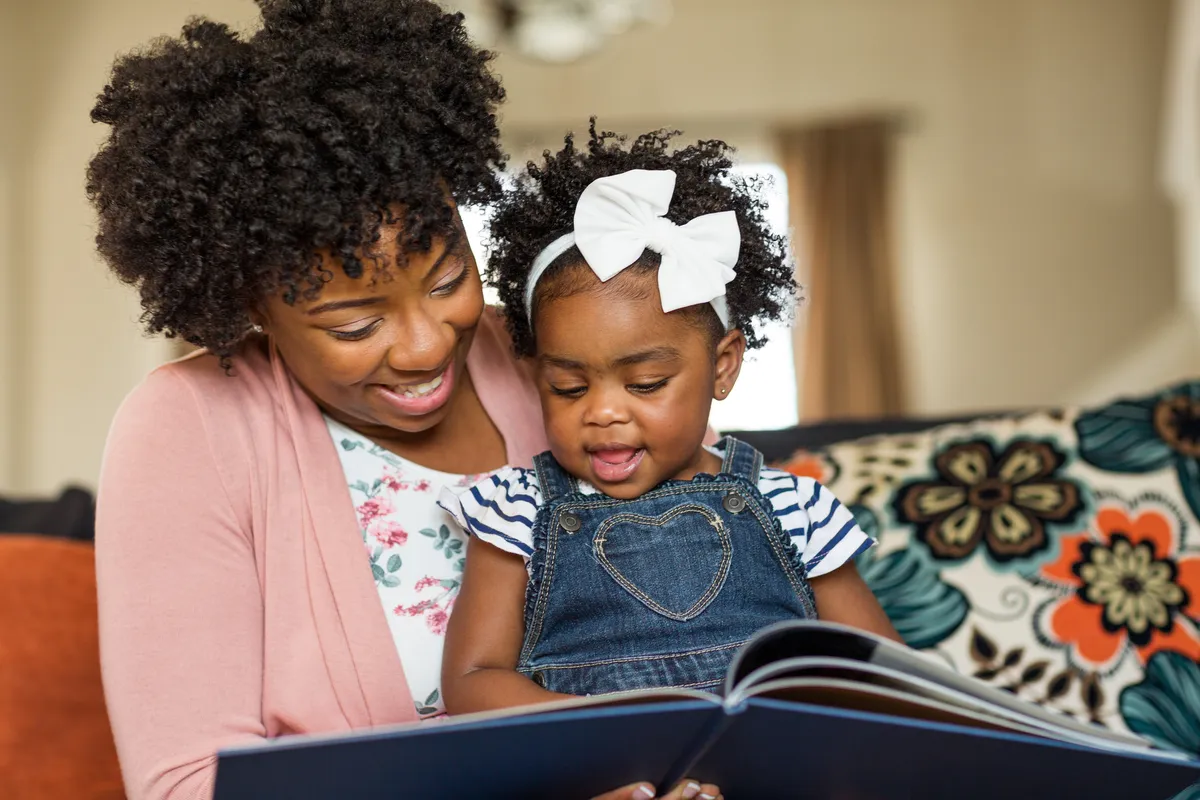
–Kwame Alexander, author
Reading with the youngest children has long been known to strengthen language development and success in school. But that’s just the beginning. Early reading is linked to emotional health and healthy development.
By the numbers: Caregivers who read 1 picture book daily to infants expose them to around 78,000 words each year. Over the course of 5 years, kids from literacy-rich homes hear a cumulative 1.4 million more words during storybook reading than children who are never read to.
- As of 2019, about 43% of parents read to their children before age 1 – nearly a 50% increase from 2014, when the American Academy of Pediatrics released new guidelines encouraging parents to read to their children beginning at birth.
But there’s more: Benefits of reading extend to social-emotional development and relational health as well. Babies who form strong bonds with caregivers in their earliest days are more likely to be resilient and thrive into adulthood – and reading is an effective way to form those bonds. What’s more, reading can reduce parental stress, improving outcomes for children. This was further reinforced in a study where babies in the Neonatal Intensive Care Unit who were read to showed greater language development.
Understanding the value of reading is one thing; making it happen in families’ real-world lives is another. For many families living under the stresses of multiple jobs, food and housing insecurity, and lack of connection to community resources, reading too often falls to the bottom of a long list of daily responsibilities.
Here are some ways caregivers can overcome obstacles that prevent them from reading to their babies:
- Whatever’s available– In the first 6 months of life, before babies begin developing language skills, experts suggest that reading anything – from magazines to adult novels – will form the building blocks of language and inspire a life-long habit.
- In any language– Parents who aren’t fluent in English might resist reading in an unfamiliar language. But reading in any language improves bonding and builds skills. Caregivers can choose books in a language other than English, picture-only or bilingual books. They all benefit children.
- Any time is reading time – Experts recommend reading with children whenever and wherever you can: riding on public transportation, waiting for an appointment, as a quiet routine before bed. It all counts. And the bonding need not always be with a full-time caregiver – encouraging daycare providers and family members to read is also useful.
2. A conversation with Marty Martinez: how books create moments that matter 📚
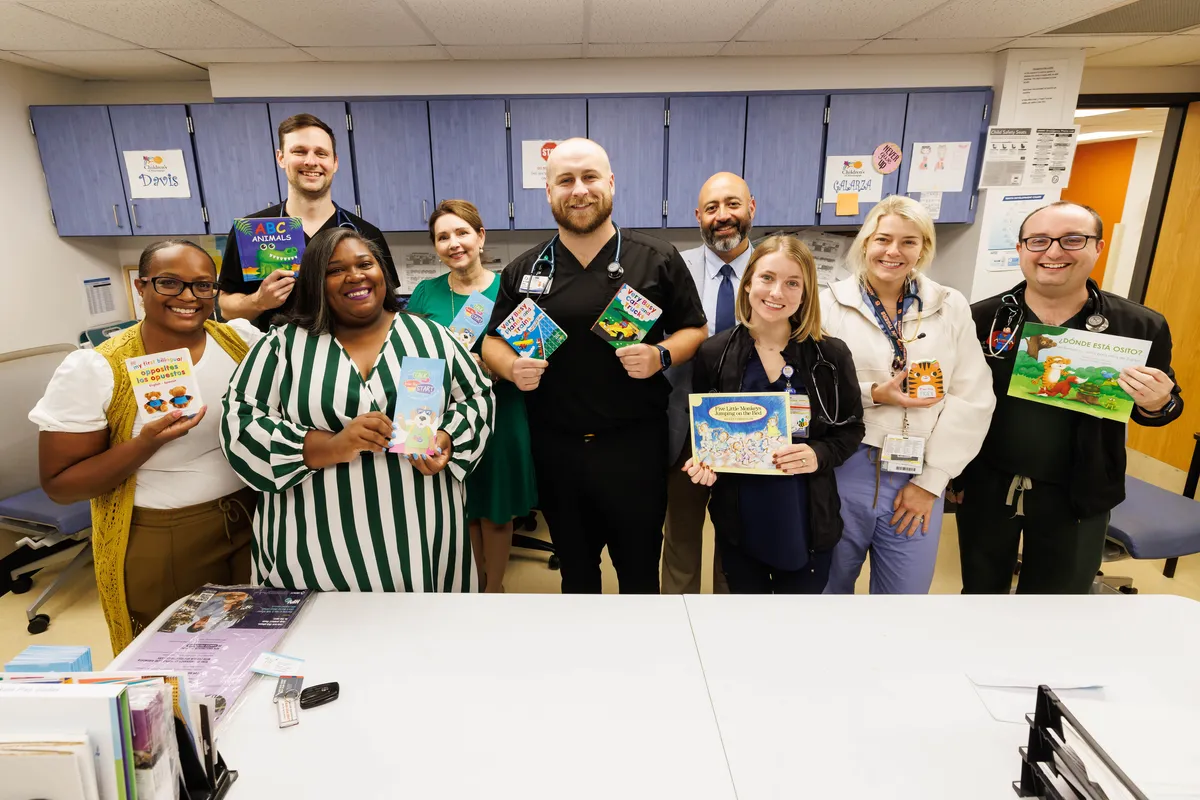
Marty Martinez took the reins as CEO of Reach Out and Read after serving as Boston’s chief of Health and Human Services during the COVID-19 pandemic. He’s a passionate believer in reading as an essential health benefit for children and families.
Founded in 1989 to help families make reading a part of their routines, Reach Out and Read focuses on pediatric clinics – a highly-trusted source of information and advice. With a presence in every state, Reach Out and Read has 6,000 program sites that provide 6.6 million books a year for use during well-child visits to specially-trained pediatricians. In 2020, Reach Out and Read enhanced its training to promote reading in infancy and its critical importance to Early Relational Health.
We sat with Marty to learn more about Reach Out and Read and the value of reading to children from their earliest days.
What does the Reach Out and Read model look like and what makes it unique?
We embed books and early literacy into well-child visits for children under age 5. We train clinicians, pediatricians, family physicians, and nurse practitioners to incorporate our books into those visits, and to model for parents how to use the books. A child is given a new book to take home at each visit, so kids accumulate, on average, 14 books by the time they turn 5.
A parent might ask, “My infant’s only 3 months old, what am I supposed to do with this book?” And the clinician will explain, “The baby can see the words, and when you move the book, their eyes will follow.” For older children, clinicians talk to parents about using words and sounds and building on them together with their children. The books also serve as a developmental assessment tool. Can a child hold the book? What does the child do when they touch the book’s pages?
The uniqueness of our model is that we are baked into the place where most children get their healthcare — the well-child visit. We reach 24% of children under 5 in the US, and our goal is for the program to be universal. And, because our model specifically involves clinicians, this helps parents see reading’s connection to wellness, health, and development.
What do young children gain from having parents or caregivers read to them?
There’s strong evidence that children who are read to are more likely to have early word development and a love of reading.
Then there’s also what you can feel and trust. When I read to my 5-year-old son, we both feel the bond it creates. Does he know more words and letters because we’re reading together? Sure. Is he confident that things sound a certain way? Sure. But when he’s sitting on my lap and we’re reading aloud, we’re also developing an emotional connection. Books build better brains, which will make you ready for kindergarten. But reading together is also where relational health is being built.
How does relational health fit with Reach Out and Read’s strategy?
At Reach Out and Read, we see books as the tools to create moments that matter. Without that book, without that connection over the words, we can’t get to the moments when relational health is being built. That is reflected in the new path we are on as an organization – training clinicians to emphasize bonding and relational health during reading. We want all children to have healthy, positive experiences – and relationships are core to that. Each book is a stepping-stone to building better brains and better relationships.
These are completely linked as an organization and that’s our strategy: The power of reading is in what it gives you both in your brain and in your heart.
A recent study of 100,000 parents identified beneficial effects of the Reach Out and Read program. What are key findings?
The study showed that parents and caregivers who were exposed to our model were 27% more likely to read to their children every day. It also showed that behaviors that support engagement in our model contributed to that outcome, including encouraging kids to be involved in the book, identifying things in the pictures with kids, and asking questions about the book.
The study reaffirmed that our model can change behavior. It underscored that, if you integrate the model, it leads to parents being more likely to read to their child. Having a study of this magnitude allows us to continue to scream on the top of the hill that what we do makes a big difference in the lives of families.
3. Tools you can use

Check out these practical tools for parents, caregivers, and families:
Wondering where to begin?
- ZERO TO THREE developed a handy guide to reading to children under 6 months – including permission to be silly when reading – because babies love funny sounds and noises.
- World Literacy Foundation offers strategies for bonding with newborns through reading. Step 1: snuggle up while reading! It makes baby feel safe and builds trust.
- Need extra motivation? Join a local library’s 1,000 Books Before Kindergarten effort and see if you can meet the challenge (yes, you can repeat).
- The National Association for the Education of Young Children (NAEYC) put together a list of books for infants and toddlers, · including such classics as Brown, Bear, Brown Bear What Do You See? and newer offerings like Pio Peep, a collection of Spanish-language nursery rhymes and Mem Fox’s Ten Little Fingers and Ten Little Toes.
- Picture books count too. The Boston Public Library shares a list of 13 picture books that support early literacy.
Want to expand your child’s experience of the world?
- Common Sense Media offers a list of books that promote diversity and inclusion featuring characters — or real-life kids — navigating the school bus, dealing with bullying, falling in love, facing physical or mental challenges, or having fantastical adventures in another time or galaxy.
- org published a colorful list of Spanish Language board books. Count to 10 with Por el Camino and experience colors, textures, and sounds with Toca, Toca Libro Juego.
- We Need Diverse Books aims to create a world where all children can find themselves in the pages of a book. They’ve created programs to mentor underrepresented writers and illustrators, support diverse publishing professionals, and provide books to classrooms nationwide.
Looking for free or low-cost books?
- Live in North Carolina? Book Harvest provides books and advice for families to promote reading for children.
- Dolly Parton’s Imagination Library, started as a service for her hometown, now sends books to 1 in 10 children in the US, in all 50 states. Learn more about how it operates in California, Colorado, and Arkansas.
- Hidden Gems Literary Emporium is a family-owned, donation-based community bookstore in New Brunswick, NJ. Its mission: Increase literacy by making reading fun for all ages, and providing free books for those most in need
4. One smile to go: Mychal the librarian
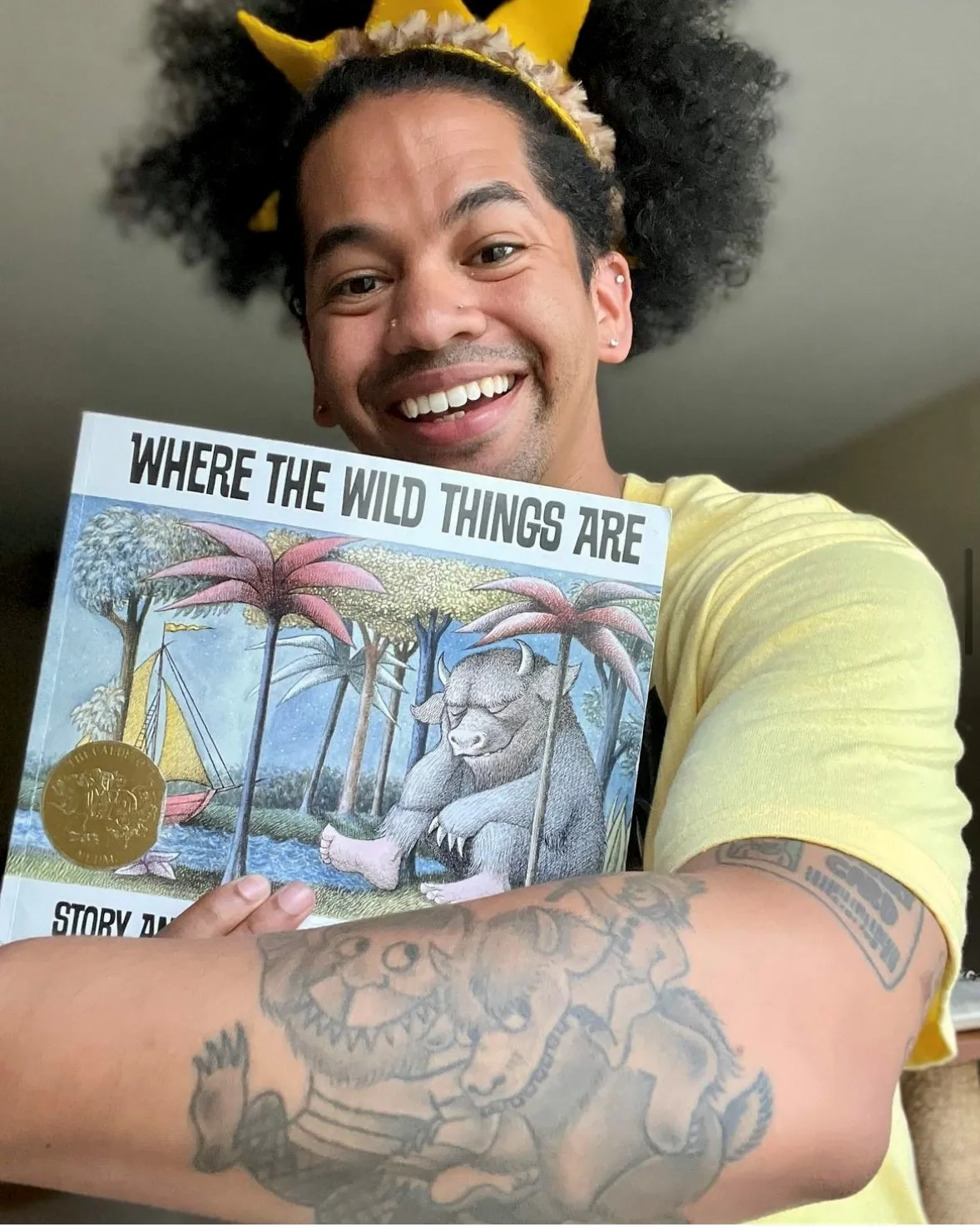
Solano County, California librarian Mychal Threet’s 300,000+ Instagram followers join him in celebrating the joy of libraries. His motto: “Having fun isn’t hard if you have a library card.” Mychal shares stories of patrons who enter through the library doors feeling they don’t belong, or facing challenges in their life, and he helps them find what they’re looking for.
A recent post about a young person looking for books on self-love delivered Mychal’s typical enthusiasm as he shared 5 excellent options: Joy! Joy! Joy! The Anthem for Black Boys by Nzinga-Christina Reid; I Am Enough by Grace Byers, I Am Every Good Thing by Derrick Barnes, Echo Mountain by Lauren Wolk, and Black Boy Joy by Kwame Mbalia.
– Mychal Threets