

1 big thing: A lot done, still more to do

Eight years ago, crisis dominated New Jersey’s maternal health landscape: stubbornly high maternal mortality and preterm birth rates, and deep racial disparities shaped by gaps in access, coordination, and trust.
With the 2019 launch of Nurture NJ, maternal and infant health were elevated to a visible, sustained priority — enabling state departments and agencies, advocates, health systems, and families to come together around shared goals.
During this period, 78 pieces of maternal and infant health legislation signed by Governor Phil Murphy — alongside hundreds of millions in state and federal investment — helped make possible key milestones:
Extending Medicaid coverage to a full year postpartum
Expanding doula and midwife availability and helping them sustain their practices and promote partnerships with hospitals
Bringing the groundbreaking Family Connects NJ free home nurse visits to the homes of newborns
Establishing the nation’s first Maternal and Infant Health Innovation Authority and breaking ground for the Maternal and Infant Health Innovation Center in Trenton
Speakers at last month’s annual Nurture NJ Leadership Summit emphasized that this progress came from persistent advocacy, coordination across sectors, governmental and philanthropic investment, research — and listening to families and frontline providers.
As Dr. Ndidiamaka Amutah-Onukagha of the Tufts University School of Medicine shared, “Improving maternal and infant health outcomes requires more than research and policy — it requires deep partnership with the communities most impacted.”
The data show progress, yet important gaps remain. The recent March of Dimes New Jersey Report Card found:
New Jersey’s 9.4% preterm birth rate is strong nationally, but slightly higher than last year — with uneven access to early prenatal and postpartum care, especially for families of color.
Low-risk C-section rates dropped to 26.7%, reflecting greater use of evidence-based care and collaboration among providers.
Maternal mortality rates improved to 23.9 deaths per 100,000 births. But — as one leader noted, “Any number above zero is a call to keep going.”
The takeaway: New Jersey has a stronger foundation than 8 years ago. The challenge now is for that progress to reach every family.
2. A conversation with former First Lady Tammy Murphy
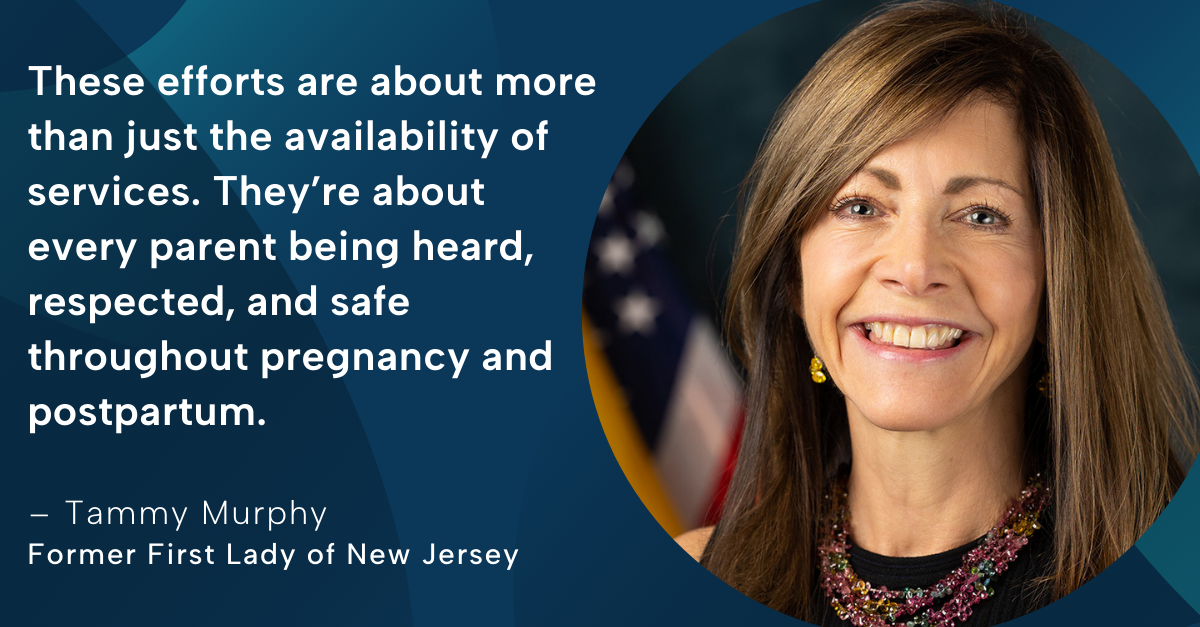
For 8 years, First Lady Tammy Murphy was among the highest-profile champions for maternal and infant health in New Jersey. Through Nurture NJ, she helped raise awareness of an issue that for too long seemed invisible. She convened and prodded advocates, health systems, researchers, and families toward an ambitious goal: Make our state “the safest and most equitable place in the nation to deliver and raise a baby.”
Her leadership influenced significant policy advances, new initiatives, and growing public involvement. We asked Mrs. Murphy to look back on Nurture NJ’s roots, what she’s proudest of, and how her work was built to last.
When you launched Nurture NJ, what inspired you to take this on?
When we started this work nearly 8 years ago, New Jersey was facing a crisis that many didn’t even know existed — or if they did, they weren’t talking about it with the urgency it deserved. Only 3 states ranked worse than New Jersey in maternal deaths, and we had among the widest disparities. As a mother of 4 in a state often called the medicine cabinet of America, I simply could not accept this.
Systems were fragmented, supports were hard to access, and policies too often ignored the voices of the families served. The burden of navigating all this fell hardest on Black and brown moms. We knew we had to do something.
One of our first steps was to launch a statewide listening tour to hear directly from moms, families, providers and advocates about the reality of our maternal and infant health crisis. We adhere to a guiding principle of “not about us without us!” Parents, doulas, nurses, midwives and community leaders with lived experiences helped us see where systems broke down, where trust had been lost, and where simple changes could have a big impact.
How is New Jersey working to close racial health gaps?
Improving overall outcomes isn’t enough if racial disparities persist. Addressing inequities requires culturally responsive care and a workforce that reflects and understands the communities it serves.
That’s why we’ve made significant investments to expand access to doula care, support community-based providers and diversify the maternal health workforce. Together, we’ve worked to integrate implicit bias training, strengthen midwifery and community health programs, and support pathways into maternal health careers for people from underrepresented communities.
These efforts are about more than just the availability of services. They’re about every parent being heard, respected, and safe throughout pregnancy and postpartum.
What accomplishments feel most meaningful? What moved the needle?
What truly moved the needle was our emphasis on breaking down silos, challenging ourselves to think outside the box and — most importantly — listening to families and communities.
From the start, we treated maternal and infant health as the urgent, whole-of-government priority it is by bringing together 22 state departments and agencies to identify shared priorities and opportunities for action. Instead of maternal and infant health being siloed within 1 or 2 agencies, these partnerships helped make this work a shared responsibility.
This emphasis helped us unify disparate efforts, accelerate work already in progress, and bring new visibility and recognition to under-resourced organizations and roles.
Since 2018, New Jersey has seen 78 pieces of maternal and infant health legislation signed by the Governor, and we’ve started or completed over half the recommendations in the Nurture NJ Maternal and Infant Health Strategic Plan released in 2021. We’ve launched such groundbreaking programs as the nation’s most robust universal nurse home visitation program, Family Connects NJ, which boasts over 8,000 visits since its rollout in 2024.
And I’m especially proud we’ve established the New Jersey Maternal and Infant Health Innovation Authority, a first-of-its-kind institution that will carry this work forward well beyond the Murphy Administration.
How will the Innovation Center shape the future?
The first-in-the-nation New Jersey Maternal and Infant Health Innovation Center will be the gold standard in maternal and infant healthcare — a place where we don’t just provide care, but pioneer it. The Center will be a hub for research, leading efforts to deliver excellence in perinatal and family care and to cultivate a diverse and skilled workforce.
Just as importantly, it ensures this work continues long-term. By housing these efforts within the Maternal and Infant Health Innovation Authority, we’ve created a new arm of government to ensure this work extends beyond any one administration, keeping equity, data, and community-driven solutions at the center of maternal health policy for years to come.
Thank you, Mrs. Murphy, for your call to action to “continue this work with urgency, compassion and shared purpose.” We’re grateful for your leadership. ⭐
3. What’s next for New Jersey?
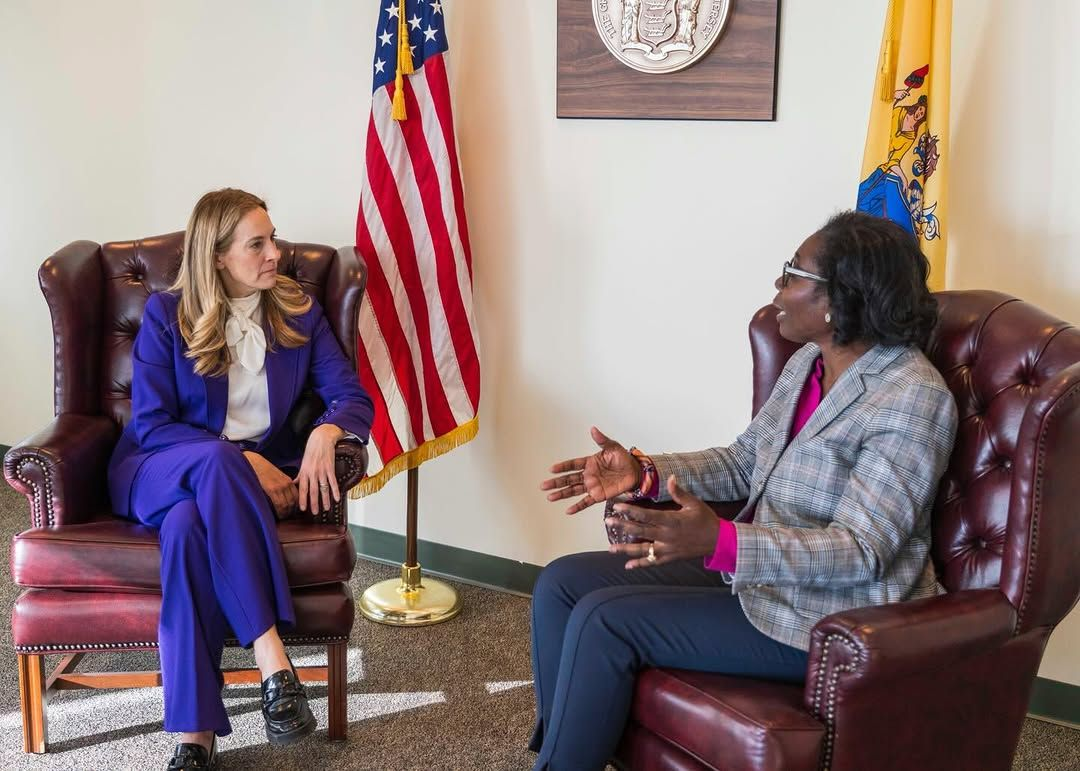
Momentum must translate into lasting change.
Maternal and infant health can’t rely on a single champion or administration. Leaders at the Nurture NJ Summit stressed the need for strong institutions, consistent leadership, and continued partnership with communities — especially as this work shapes long-term health and stability across the state. As doula and author Latham Thomas, the keynote speaker, said, “When we uplift mothers, we uplift generations.”
Looking ahead, priorities should include:
Advancing relationship-based care models — because trust, continuity, and strong provider-family relationships are foundational to health during pregnancy and postpartum.
Strengthening the maternal health workforce — investing in midwives, doulas, nurses, and community health workers.
Investing early to prevent crisis later — supporting early and continuous perinatal care and community-based services to reduce costly emergency interventions down the road.
Grounding decisions in evidence and community input — so policies and programs reflect needs and measure impact.
Protecting progress with bipartisan leadership — keeping maternal health a long-term priority across administrations and branches of government.
A commitment to continuity is already taking shape. Governor Sherrill kept Lisa Asare as President and CEO of the New Jersey Maternal & Infant Health Innovation Authority, with the position continuing to be cabinet level. Plans include ongoing investment in the doula and midwife workforce, expanding use of telehealth, and strengthening home visiting programs.
Similarly, Children and Families Commissioner Christine Norbut Beyer continues in an interim capacity while a replacement is found, providing continuity for a department central to family support.
📄 See the future: The New Jersey Blueprint for Maternal and Infant Health and Path for the Next Decade outlines priorities for the next phase of this work.